
Asphalt paving in Riverside can refresh a driveway and improve curb appeal, which may influence how buyers view a home. Paving alone does not determine resale value: the pavement’s condition, project scope, and finished result matter too.
Learn how paving can affect a home, which services suit different asphalt surfaces, and how location and project scope shape planning in Riverside, San Bernardino County, and nearby communities.
The average interest distance for asphalt paving contractors in Riverside, California, is 41 miles, a local reference for planning work across the region; City Service Asphalt is based in Corona and has served Southern California since 1994.
Key Takeaways
- The 41-mile average interest distance is a local reference for paving projects, while site location and scope affect contractor travel.
- Paving, overlay, sealcoating, and repair address different pavement project needs.
- Driveway condition and finished appearance can affect how repaving influences a home’s appeal and value.
- For a commercial lot, access, surface condition, and striping needs are factors in planning a practical pavement work scope.
How far are Asphalt Paving contractors in Riverside, CA willing to travel?
Commercial asphalt contractor listings can help Riverside property owners identify businesses serving the area. The average interest distance for asphalt paving contractors in Riverside, California, is 41 miles. This is a regional reference, not a guaranteed travel limit. A retail center near the 60 or 91 freeway may draw contractors from beyond Riverside, depending on the project’s size and schedule.
At commercial and retail sites, project plans account for site access, parking demand, and how crews can work around customers and deliveries. A lot serving several storefronts may have work staged by section to keep some parking available. Similar plans may apply to driveways connected to busy commercial entrances.
Maintenance also shapes the project plan. Regular inspections can help owners spot cracks or shifting before damage spreads. Sealcoating and crack filling are common maintenance measures for commercial pavement. Drainage, surface condition, and asphalt thickness help determine whether repairs or resurfacing suit the site.
Commercial paving scope depends on lot size and condition, asphalt thickness, drainage needs, and scheduling. These factors shape the work plan for a parking lot or retail property. Asphalt and concrete are different paving materials; the right choice depends on site use, conditions, and maintenance priorities.
According to the City of Riverside Public Works Department, construction permit applicants must be state-licensed contractors with a license class applicable to the work. Permit requirements vary with the specific driveway or parking lot work proposed.
New asphalt needs time to cool and firm before traffic uses it. The wait depends on conditions such as weather, pavement depth, and whether the surface will carry cars or heavier commercial vehicles.
Asphalt installation, resurfacing, and repair
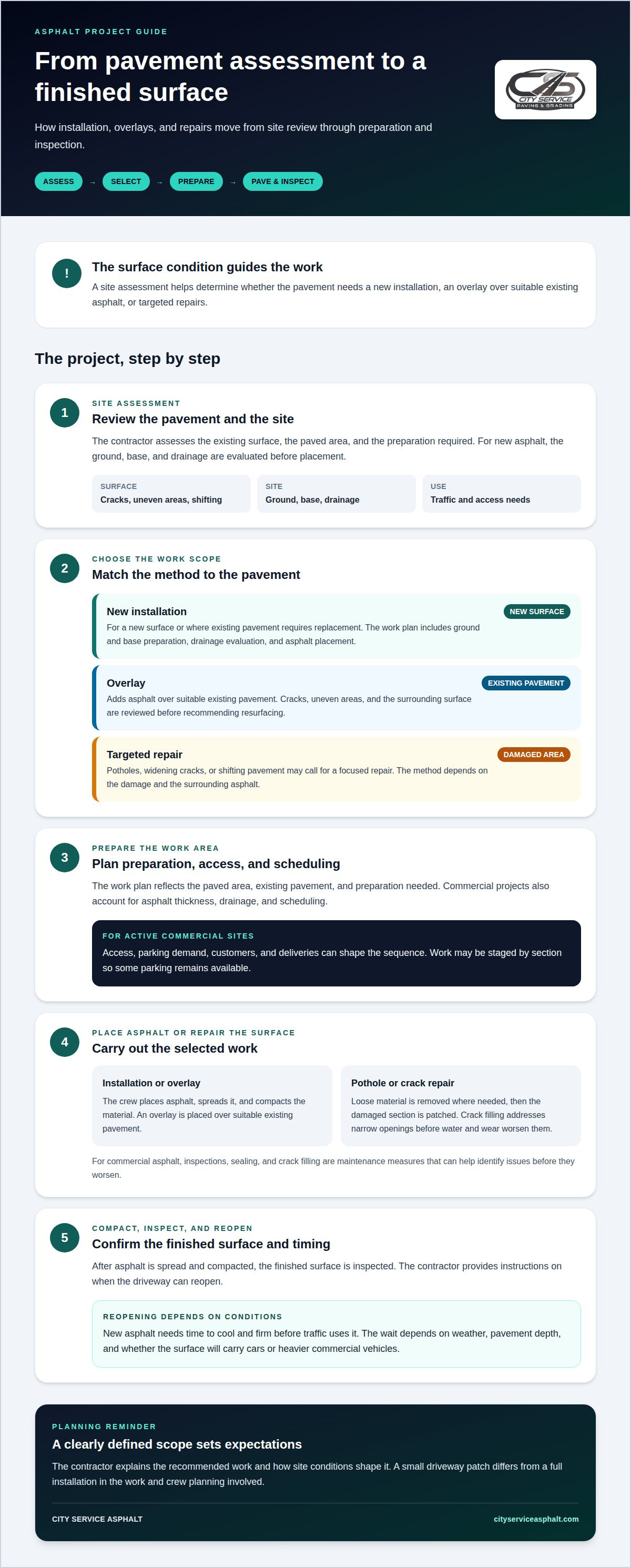
Residential paving begins with a site assessment, followed by preparation, asphalt placement, and compaction. Pavement condition helps determine whether the project calls for new installation, an overlay, or targeted repairs.
Installation and Resurfacing
For new asphalt paving, a professional assesses the ground, prepares the base, and evaluates drainage before placing asphalt. The crew spreads and compacts the material, then inspects the finished surface. An overlay adds asphalt over suitable existing pavement. Before recommending one, the contractor reviews cracks, uneven areas, and the surrounding surface. The crew provides instructions on when the driveway can reopen.
Pothole and Crack Repairs
Potholes, widening cracks, and shifting pavement signal that a surface needs attention. A professional identifies the damaged area, removes loose material where needed, and patches the section. Crack filling addresses narrow openings before water and wear make them worse. The repair method depends on the damage and surrounding asphalt. Inspections can help commercial property owners spot issues and plan targeted maintenance.
Project Scope and Site Conditions
The work plan depends on the paved area, existing pavement, and preparation required. Commercial projects also account for asphalt thickness, drainage, and scheduling. A small driveway patch differs from a full installation in the work and crew planning involved. During the assessment, the contractor explains the recommended scope and how site conditions shape the work. A clearly defined scope outlines what the project includes before work begins.
Sealing, crack filling, and professional inspections are maintenance measures for commercial asphalt pavement and can identify issues before they worsen. Milling and overlay are resurfacing options for asphalt pavement.
Service areas in Riverside and San Bernardino counties
For a paving project across Riverside and San Bernardino counties, the site location, pavement area, and access needs help establish whether the work fits a contractor’s service area and how crews can reach the property. A driveway in a residential neighborhood presents different access needs from a commercial parking lot with active customer traffic.
Riverside’s industrial corridors include routes along the 60 and 91 freeways. Those corridors connect commercial and industrial properties, but a nearby freeway alone doesn’t determine whether a contractor will travel to a site. The project’s scope, equipment access, and work schedule also shape the service plan. For example, a large industrial pavement job may need a different crew plan than a small retail entrance repair.
Scheduling reflects the property’s operating needs. A retail parking lot may need work staged around customer access, while a municipal site may require coordination around its regular use. Before work begins, the contractor can map the paving areas, identify entrances that must remain usable, and sequence the work to manage site access. Clear boundaries help owners plan around closures and deliveries.
For a Riverside-area project, the property address, pavement type, and affected area provide useful planning details. The work may involve a driveway, parking lot, or industrial pavement, with access constraints such as delivery routes. These details give the contractor a practical basis for planning the work. Across Riverside County, San Bernardino County, and nearby areas, site access and project scope remain central to planning.
Asphalt paving in Riverside
Riverside projects range from home driveways to commercial parking lots. Surface condition guides the work. Services include new paving, overlays, removal, repairs, and sealcoating.
Riverside Paving Options
New asphalt paving may fit a site that needs a new surface or where existing pavement requires replacement. For a driveway, the contractor assesses the base, drainage, access, and planned use before defining the work. An overlay adds a fresh asphalt layer over suitable existing pavement. The contractor reviews cracks, uneven areas, and surrounding pavement to determine whether resurfacing fits.
For commercial owners, a parking lot assessment can include vehicle flow, entrances, and areas that need to stay accessible during work. Layout planning can account for accessible parking spaces and routes, with ADA compliance in view. The project plan can also identify which sections crews can complete while limiting disruption to site access.
Available Asphalt Services
Asphalt services in Riverside, California, cover more than installation. Pothole patching, crack filling, and other repairs address damaged areas; asphalt removal clears pavement that needs replacement. Sealcoating protects suitable asphalt from wear and weather exposure. Regular inspections can help identify cracks or shifting early, so owners can plan maintenance before damage spreads.
The appropriate service depends on the pavement’s condition. A driveway with localized damage may need a repair, while broad surface wear may call for an overlay or replacement. For a retail parking lot, the assessment can consider pavement condition, traffic patterns, and striping needs. A clear scope connects the visible problem to the appropriate work.
For homeowners and commercial property owners, service suitability depends on the surface. New paving establishes a surface, overlays renew suitable pavement, and repairs target specific damage. Sealcoating helps protect maintained asphalt, while inspections can flag developing issues.
City Service Asphalt: Driveway Paving Riverside
City Service Asphalt helps Riverside homeowners and property managers maintain asphalt surfaces with driveway paving, asphalt paving, sealcoating, and asphalt overlays. The right service depends on pavement condition, the area involved, and how you use the surface.
For a home driveway that needs a new surface, driveway paving provides a direct route to a planned asphalt installation. Asphalt paving also suits properties that need pavement installed or replaced. The project scope can account for the driveway layout, access, and existing surface conditions. For commercial properties, paving work can address parking areas as well as residential driveways.
An asphalt overlay can renew suitable pavement by adding a layer over the existing surface. It may fit when the underlying pavement can support resurfacing. Before choosing an overlay, assess visible cracking, uneven areas, and the surrounding surface. More extensive damage may require a different approach than covering the surface.
Sealcoating serves a different purpose. It helps protect asphalt from wear and weather exposure, making it a maintenance option for driveways and paved property areas. Pavement condition matters: sealcoating does not replace repairs for potholes or shifting. A clear assessment distinguishes surface protection from work that repairs or renews damaged pavement.
City Service Asphalt can help you determine whether your project calls for driveway paving, broader asphalt paving, an overlay, or sealcoating. Share the property type, affected area, and what you see on the pavement. That gives the project discussion a practical starting point, whether you manage a home driveway or commercial site.
Contact City Service Asphalt to discuss your paving project.
Frequently Asked Questions
How long will a driveway last?
An asphalt driveway typically lasts 15 to 30 years. Its lifespan depends on pavement condition, drainage, traffic, and maintenance. Repeated vehicle use can wear high-traffic areas faster than lightly used sections. A professional inspection can identify cracks, shifting, or standing water that may need attention. Addressing those signs can help you plan maintenance before damage spreads across the driveway.
What square footage ranges are asphalt paving projects in?
Riverside asphalt paving projects average 9,289 square feet, and the largest reported project is 59,029 square feet. These figures show how project sizes range from smaller paved areas to large commercial sites. Square footage defines the work area, while access, pavement condition, and property use shape the plan. A driveway and a parking lot, for example, have different layouts and operating needs.
Which asphalt paving contractors serve Riverside, and how are they rated?
City Service Asphalt serves Riverside and lists service in San Bernardino County, Los Angeles, Ontario, Corona, Anaheim, and Orange County. Ratings vary by review platform and can change over time. Recent feedback may cover work such as driveway paving, parking lot repairs, or overlays. Specific comments about communication, project scope, and completed surfaces offer more useful context than a rating alone.
What does an asphalt paving project in Riverside include?
The project scope describes the work planned for your site, such as preparing the area, addressing existing pavement, and installing or resurfacing asphalt. A driveway project may focus on access and the condition of its base, while a commercial lot may involve several pavement sections. A project scope can identify the work area and task sequence, clarifying what the project covers.
Which site conditions shape an asphalt paving project in Riverside?
Existing pavement condition, the area involved, drainage, asphalt thickness, and equipment access all shape the work plan. For example, damaged asphalt may need removal or repairs before new paving proceeds. A retail property also requires planning around entrances and customer traffic. These conditions help determine the right work and how crews can organize the project.
How can a professional help maintain asphalt pavement in Riverside’s climate?
A professional can inspect Riverside pavement for cracks, shifting, worn areas, and drainage problems, then recommend suitable maintenance. Crack filling can address developing openings, while sealcoating helps protect suitable asphalt from wear and weather exposure. On a commercial lot, an inspection can identify heavily used sections. This information helps owners plan maintenance around traffic patterns and daily site operations.